
Low-buy vs no-buy
A no-buy year means buying only essentials (housing, bills, groceries, medicine, transport) and nothing else. A low-buy year is gentler: you write down a short list of things you're still allowed to buy, set a limit, and pause everything else. Most people find a low-buy easier to stick with for twelve months.
How to set it up in 5 steps
- Write your why. Pay off a card, build an emergency fund, clear clutter. A specific reason helps on the days you want to cave.
- Pick your rules. Keep them short and clear, for example: one in, one out; use up before restocking; no shopping apps on my phone.
- Make an allowed-buys list. Planned gifts, replacements for broken essentials, one hobby budget. If it's on the list, buying it isn't breaking the rules.
- Use a 30-day wait list. Write down anything you want that's not allowed. If you still want it in 30 days, decide on purpose.
- Log it every month. Write what you spent on wants and what you kept. Move the saved amount to savings or debt the same day so it doesn't get spent anyway.
Free printable: Low-Buy 2027 Tracker
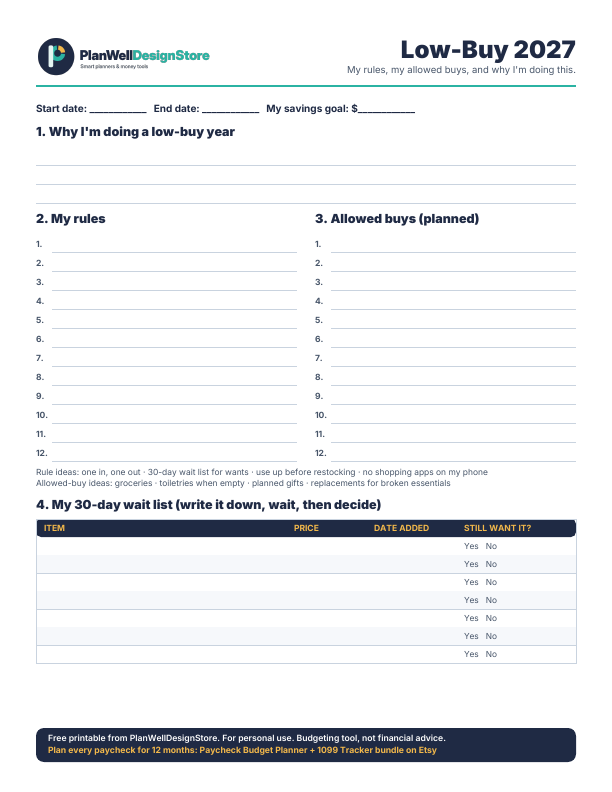
Two pages, US Letter: your why, 12 rules, 12 allowed buys, a 30-day wait list, and a January–December money-saved log with a spending cap, spent-on-wants and saved column for every month.
Make the money you save count
A low-buy works best when every paycheck has a plan. Try the free paycheck budget calculator to see what's safe to spend, and read which 2027 months have three paychecks, a good time to move extra savings.